
 by
by 
Fhogis930.5z defines a smart computing core framework for reducing latency, improving workload control, protecting data flow, and keeping connected systems stable under real operating pressure.
The value of fhogis930.5z is practical: it gives teams a sharper way to judge whether a computing core can support real workloads, not just attractive specification sheets.
- What the Term Means in Smart Computing
- Core Performance Is Not the Same as Raw Speed
- Field Note Scenario: What Actually Breaks
- Comparison Table: Weak Core vs Optimized Core
- Hardware and Architecture Signals to Check
- Real Estate and Smart Building Use Cases
- Common Mistakes to Avoid
- Practical Adoption Checklist
- Final Takeaway
- FAQs
What the Term Means in Smart Computing
In this article, fhogis930.5z is treated as a performance model for smart computing architecture. It connects five areas that decide whether a system feels responsive or fragile: processing, memory, routing, security, and recovery.
Modern connected environments rarely run one clean task at a time. A smart building may collect occupancy data, adjust HVAC, process camera events, and send alerts within the same minute.
A serious fhogis930.5z review should ask one direct question: can the core keep critical actions moving when demand rises?
Core Performance Is Not the Same as Raw Speed
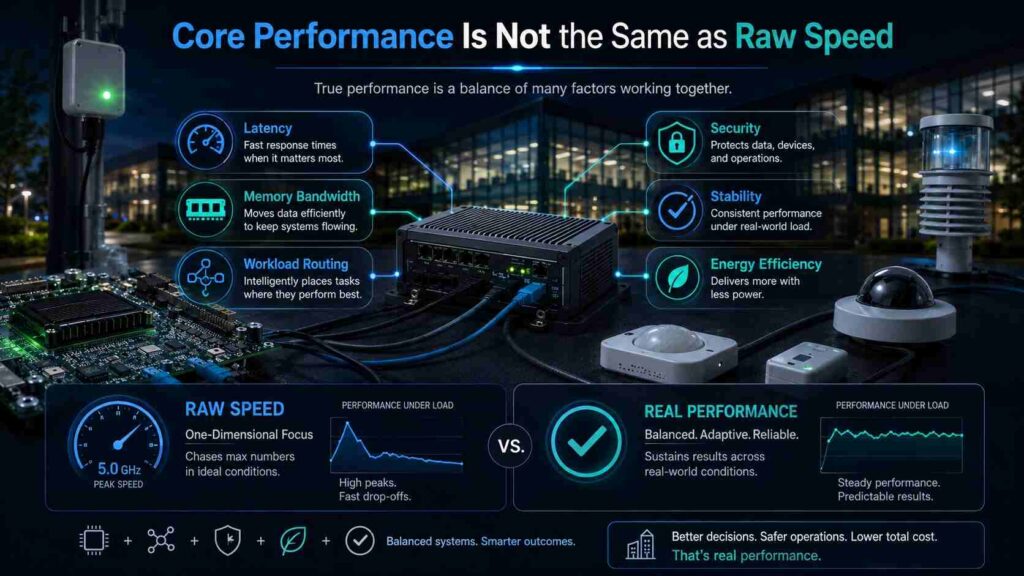
Raw speed looks good in marketing. Operational performance is harder to fake.
A fast processor can still produce slow results if memory bandwidth is tight, packets queue at the gateway, or every decision must travel to the cloud before action is taken. The best use of fhogis930.5z is to expose those hidden bottlenecks.
For a smart system, useful performance means stable response under load. In practical terms, local automation should not wait 700 milliseconds because noncritical reports are consuming the same compute path.
Field Note Scenario: What Actually Breaks
Use this as a realistic commissioning scenario, not a certified lab benchmark.
A 20-floor commercial site runs 450 IoT points across HVAC, lighting, access control, and occupancy analytics. During peak entry hours, MQTT packet drops appear at the gateway, BACnet device polling becomes uneven, and the operations dashboard freezes for two to three seconds.
The first assumption is usually “increase CPU clock speed.” That rarely solves the full problem.
A better approach shifts urgent rules to edge processing, separates telemetry from control traffic, and reserves compute for high-priority events. In a modelled before-and-after test, local processing latency drops from 1.2 seconds to 45 milliseconds because the system no longer waits on cloud-heavy routing for routine actions.
That is the measurable improvement fhogis930.5z should target.
Comparison Table: Weak Core vs Optimized Core
| Area | Weak Smart Core | Optimized Smart Core |
|---|---|---|
| Latency | 500 ms to 1.2 s response during load | 30 to 80 ms for local control events |
| Workload routing | CPU handles too many mixed tasks | CPU, GPU, or NPU receives the right workload |
| Memory flow | Repeated reads slow dashboards | Cached priority data supports faster decisions |
| Protocols | MQTT and BACnet compete without priority | Control traffic is separated from reporting traffic |
| Security | Logs and updates are inconsistent | Access, patching, and alerts are centrally governed |
| Scalability | More devices create visible lag | New devices are added without breaking response time |
Use fhogis930.5z to inspect the gap between these two columns. The goal is not to buy the most expensive hardware. The goal is to remove the constraint that slows the user-facing operation.
Hardware and Architecture Signals to Check
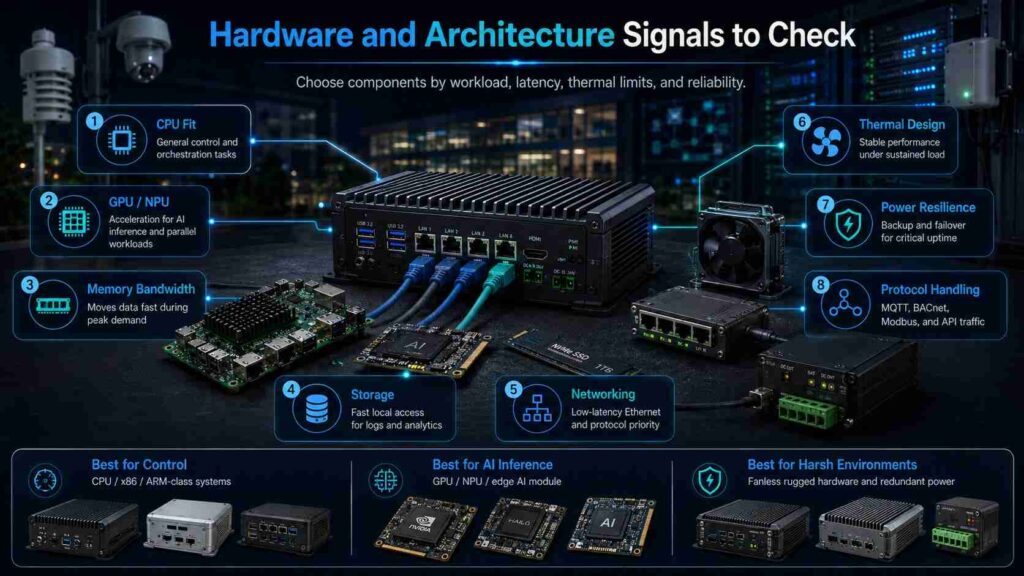
When fhogis930.5z is applied to real infrastructure, hardware selection must match workload type. A small ARM Cortex device can handle local sensor logic, but it should not be expected to run heavy video inference.
An Intel Core system may fit dashboard processing and local orchestration. NVIDIA Jetson hardware is often considered where edge AI and camera analytics are central. A dedicated NPU can be more efficient than a GPU for repeated AI inference, while a GPU remains valuable for broader parallel workloads.
The rule is simple: do not force every task through the same resource.
Real Estate and Smart Building Use Cases
For real estate teams, fhogis930.5z should be used before adding more “smart” features to a property. More devices create more data, but more data does not automatically create better operations.
The pain points are specific. Tenants complain when access gates lag. Facility teams lose trust when HVAC dashboards freeze. Security teams miss value when camera alerts arrive late or flood the console with low-priority events.
A stronger core helps the building respond like one coordinated asset.
Also Read: Why Does My WiFi Keep Disconnecting? 10 Fixes
Common Mistakes to Avoid
A common mistake is presenting fhogis930.5z as a magic product label. It is more useful as a performance discipline.
Do not measure only peak processor speed. Measure latency under load, packet loss, thermal behavior, recovery time, memory pressure, and the number of critical tasks completed without delay.
Do not ignore security. High-speed connectivity means nothing if authentication is flawed; a system that lacks robust access security is unfit for production environments.
Practical Adoption Checklist
Before adopting fhogis930.5z, review these points with the technical team:
- Which actions need sub-100 ms local response?
- Which workloads can safely move to the cloud?
- Are MQTT, BACnet, Modbus, or API calls prioritized correctly?
- Is AI inference assigned to CPU, GPU, NPU, or edge accelerator by task type?
- Can the system keep operating if the network connection drops?
- Are logs, access control, firmware updates, and alerts managed from one clear process?
This checklist reduces the risk of buying hardware before understanding the real bottleneck.
Final Takeaway
The practical value of fhogis930.5z is that it moves the focus away from vague speed claims and toward measurable results: lower latency, cleaner routing, safer data handling, and stronger uptime.
Treat fhogis930.5z as a readiness test. If the core cannot keep critical workloads responsive during peak demand, the system is not ready for serious automation.
FAQs
What does the term mean?
fhogis930.5z means a structured way to evaluate smart computing core performance across latency, routing, memory, security, and reliability.
Is it a physical device?
Not by default. It should be treated as a performance framework unless a vendor defines it as a product.
Why does latency matter?
Latency decides how quickly a system reacts after input. In smart buildings, delayed response can affect access, comfort, safety, and operational trust.
Who should use this framework?
IT leaders, facility managers, proptech teams, IoT engineers, and asset owners should use it when connected systems start adding complexity.
