


If you are trying to understand how HCS 411GITS software built, you are probably not looking for theory. You want to know what goes into the system, how developers improve it, and why some software projects become reliable while others become slow, confusing, or expensive to maintain.
HCS 411GITS is best understood as a structured software system for managing workflows, data, users, and operational tasks. Depending on how an organization uses it, it may function like an internal tracking platform, a lightweight business operations tool, or a custom system that connects teams, reports, and permissions.
This manual provides a clear, straightforward walkthrough of the entire construction process. You will learn how HCS 411GITS-style software is planned, designed, coded, tested, improved, and maintained for long-term use.
- What Is HCS 411GITS Software Used For?
- How Is HCS 411GITS Software Built?
- Why Does HCS 411GITS Software Architecture Matter?
- How Can Teams Improve Software HCS 411GITS After Launch?
- What Security Features Should HCS 411GITS Include?
- What Are the Biggest Mistakes in Building HCS 411GITS?
- How Should HCS 411GITS Be Maintained Long Term?
- Conclusion
- FAQ About HCS 411GITS Software
What Is HCS 411GITS Software Used For?
HCS 411GITS software is typically used to organize tasks, user roles, records, reports, and internal processes in one controlled system. Think of it as a custom workflow platform rather than a single fixed product.
In real business settings, a system like this may support ticket tracking, approval flows, project updates, customer records, compliance logs, or management dashboards. It may share similarities with tools such as Jira, Asana, Microsoft Dynamics, or custom CRM platforms, but the final structure depends on the organization’s needs.
For a company in the United States with several departments, the software might help branch teams submit requests, managers approve work, and leadership review performance reports from one dashboard.
How Is HCS 411GITS Software Built?
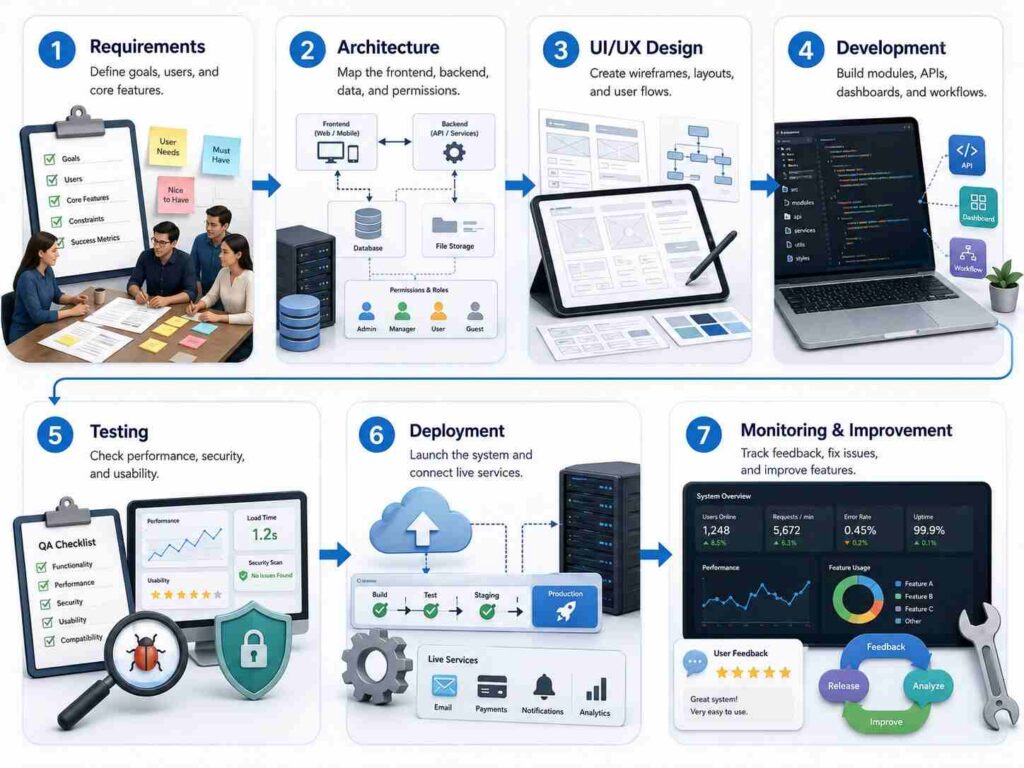
HCS 411GITS software is built through a structured development process that moves from planning to design, coding, testing, deployment, and continuous improvement.
The first step is discovery. Developers need to understand the users, business goals, required features, data sources, security risks, and reporting needs. Without this stage, teams often build features that look useful but do not solve the real problem.
Next comes architecture planning. This defines how the frontend, backend, database, integrations, and user permissions will work together. After that, developers build the core modules, test them, fix issues, and prepare the system for launch.
A practical build usually includes:
Requirement mapping, user role planning, database design, interface design, API development, security setup, testing, deployment, monitoring, and future updates.
Why Does HCS 411GITS Software Architecture Matter?
Architecture matters because it decides whether the software can grow without breaking.
A clean HCS 411GITS architecture usually separates the system into modules. One module may handle users and permissions. Another may manage tasks or tickets. Another may generate reports. This separation makes the software easier to update, troubleshoot, and scale.
For example, if the reporting dashboard becomes slow, developers can improve the reporting layer without rewriting the login system or task module. That saves time and lowers risk.
Strong architecture also protects sensitive data. A field employee should not see the same information as a senior administrator. Role-based access keeps the system useful while reducing privacy and security problems.
How Can Teams Improve Software HCS 411GITS After Launch?

To improve software HCS 411GITS, teams should use real evidence instead of guesswork.
The most useful improvement signals come from support tickets, user feedback, system logs, loading speed, failed actions, search behavior, and feature usage data. If users keep abandoning a form, the form may be too long. If reports take too long to load, the database may need better indexing. If people constantly ask how to complete a task, the interface may need clearer labels.
A smart improvement plan focuses on small, measurable upgrades. Instead of rebuilding everything, the team can improve search filters, simplify dashboards, remove duplicate steps, strengthen permissions, or automate repeat tasks.
Practitioner note: In many workflow software projects, the biggest delay is not coding. It is usually unclear ownership. When nobody agrees who approves requests, who manages data, or who can change settings, the software becomes messy. A clear approval map often solves more problems than adding another feature.
Also Read: Blooket Bot Explained: How It Works, Risks, and Safer Ways to Use Blooket
What Security Features Should HCS 411GITS Include?
HCS 411GITS should include secure login, role-based permissions, encrypted data, audit logs, backup planning, input validation, and regular security reviews.
Security is not something to add at the end. It should be part of the first planning meeting. If the system stores customer records, employee information, financial data, or operational reports, the risk level increases.
For U.S. organizations, security requirements may depend on the industry. Healthcare, finance, education, and government-related businesses often need stricter data handling, access controls, and audit trails.
At minimum, teams should ask these questions:
Who can log in? What can each role see? What actions are recorded? How is data backed up? What happens if a user leaves the company? How long does it take for the platform to get back online after a downtime event?
What Are the Biggest Mistakes in Building HCS 411GITS?
The most common mistake is building before understanding the workflow.
A second mistake is adding too many features too early. A crowded system becomes harder to use and harder to maintain. Start with the core workflow, then add advanced features after users confirm what they actually need.
A third mistake is weak integration planning. If HCS 411GITS connects with email, CRM tools, accounting software, analytics platforms, or legacy databases, developers need clean APIs and error handling. Otherwise, one broken connection can disrupt the entire process.
The final mistake is ignoring training. Even well-built software fails when users do not understand how to use it. Short onboarding guides, tooltips, help pages, and role-specific training can improve adoption quickly.
How Should HCS 411GITS Be Maintained Long Term?
Long-term maintenance should include updates, bug fixes, performance checks, security patches, database cleanup, user feedback reviews, and roadmap planning.
Good maintenance is proactive. Teams should not wait until the system becomes slow or unreliable. Monthly reviews can identify small issues before they become expensive problems.
A simple maintenance checklist includes checking error logs, reviewing inactive users, testing backups, monitoring page speed, updating dependencies, reviewing permission changes, and collecting user feedback.
Conclusion
Understanding how HCS 411GITS software built comes down to one simple idea: reliable software is designed around real workflows, not assumptions. A strong system needs clear requirements, modular architecture, secure access, careful testing, and steady improvement after launch.
The next step is to review your current workflow, list the biggest pain points, and decide which improvements will make the system easier, faster, and safer for users. For deeper planning, read a related guide on workflow automation or speak with a software expert before starting a full rebuild.
FAQ About HCS 411GITS Software
How is HCS 411GITS software built?
HCS 411GITS software is built through planning, architecture design, development, testing, deployment, and ongoing improvement. The process starts with understanding user needs and ends with regular updates.
What is the best way to improve software HCS 411GITS?
The best way to improve software HCS 411GITS is to study real user behavior, fix slow or confusing areas, improve security, and release small updates based on measurable problems.
Is HCS 411GITS similar to Jira or Asana?
It can be similar in purpose if it manages tasks, workflows, or reports. However, HCS 411GITS may be more customized depending on the organization’s internal processes and technical setup.
Why do HCS 411GITS projects fail?
They usually fail because of unclear requirements, poor workflow planning, weak integrations, limited testing, or low user adoption. Most failures can be reduced with better planning before development starts.
Does HCS 411GITS need regular maintenance?
Yes. Regular maintenance keeps the software secure, fast, accurate, and useful. It also helps teams adapt the system as business needs change.
